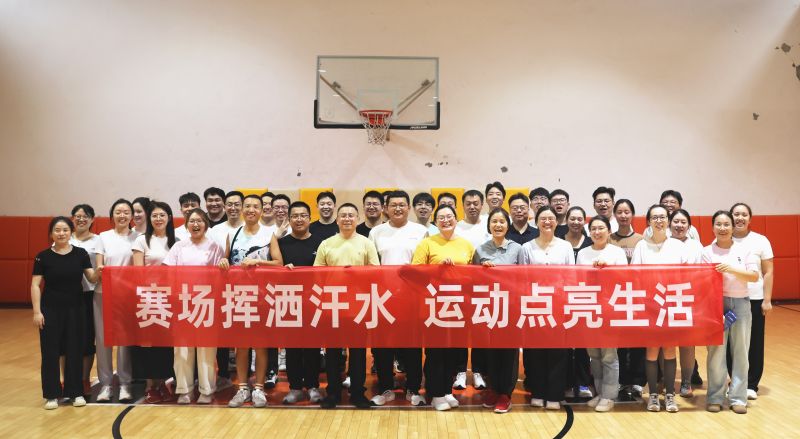
To enrich the leisure cultural and recreational activities of our company employees, promote a positive and healthy lifestyle, further strengthen team cohesion, and showcase our employees' vibrant and optimistic spirit, our company successfully hosted a fun table tennis and badminton competition on September 23. All participating employees took active part in the event, striving diligently to complete all competition rounds within a relaxed, enthusiastic, fair, and equitable atmosphere.On the court, the atmosphere was vibrant and full of excitement. In the badminton arena, white feathers fluttered and the pace was brisk; the players moved with agility and swift footwork, executing high clears, net drops, and powerful smashes in rapid succession—all executed with fluid and precise movements. Cheers and applause erupted repeatedly across the court, creating a fervent and electric atmosphere. In the table tennis arena, silver balls danced and shifted in an instant; the athletes remained composed and calm, balancing offense and defense with precision—delivering accurate serves, steady net shots, and fierce smashes. Every stroke reflected their focus and prowess. As the rallies unfolded and the scores remained neck-and-neck, the players fully demonstrated their solid competitive skills and exceptional psychological resilience.Dynamic Arena, Enjoying SportsOn the field, the contestants gave their all, striving for excellence, strictly adhering to the competition rules, showing respect for both the referees and their opponents, and upholding the competitive spirit of "friendship first, competition second" —exchange skills and engage in healthy competition. Off the field, participants encouraged one another, shared experiences, shed the formality of their work environments, and fully enjoyed the joy of sports, thereby vividly demonstrating the exemplary qualities of our company employees: teamwork, proactive initiative, and perseverance.Group photo of the top three players in the badminton matchGroup photo of the top three table tennis players before the matchThis table tennis and badminton competition has not only provided employees with a platform to hone their skills and showcase their talents, but has also effectively alleviated work-related stress and enriched the company's cultural and recreational life. By uniting strength through sports and empowering growth through perseverance, this event has fully reflected the company's positive, healthy, and cohesive corporate culture of striving forward. In the future, the company will continue to organize a diverse range of cultural and recreational activities to enrich its employees' leisure time, foster team synergy, and enable all staff members to approach their work and personal lives with greater enthusiasm and higher morale—working side by side and advancing together with shared determination.
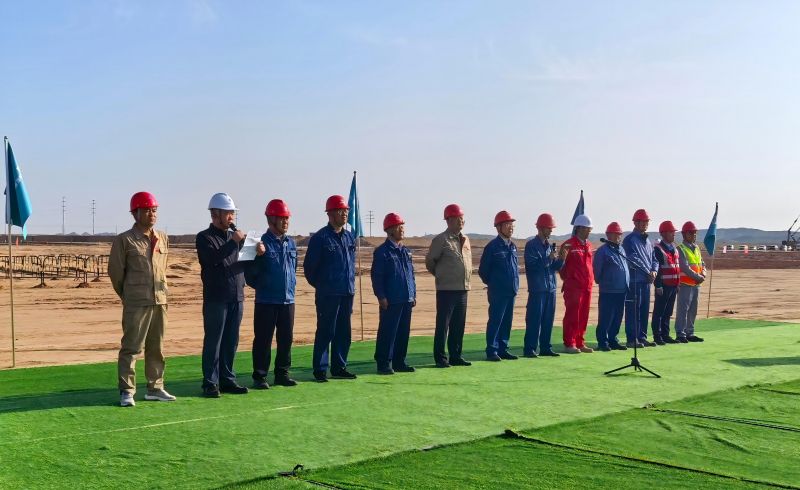
On September 15, the groundbreaking ceremony for the main structural installation works of the 2×1000 MW thermal power plant project in the Lanzhou New Area, Gansu Province, was grandly held at the Lanzhou New Area, Lanzhou City, Gansu Province. With colorful flags fluttering and machinery arrayed in formation, the issuance of the commencement order marked the official entry of this project into its full-scale construction phase. Relevant officials from the local government, the project owner, the supervision unit, the construction contractor, and other parties attended the groundbreaking ceremony.This project involves the construction of two 1000 MW high-efficiency ultra-supercritical coal-fired power generation units, alongside the simultaneous installation of supporting facilities such as flue gas desulfurization, denitrification, and dust removal systems, as well as a chimney and a circulating water system. The project employs leading domestic high-efficiency clean coal-fired power generation technology; key performance indicators—including coal consumption per unit of electricity generated and pollutant emissions—are designed in accordance with ultra-low emission standards. Upon completion and commissioning, the project is expected to generate approximately 8 billion kWh of electricity annually, playing a significant role in alleviating regional power supply and demand imbalances, optimizing the energy mix, and fostering local economic development.Commencing work and launching into full sprint – as a critical phase of the project, the foundation construction for Boiler No.1 was initiated first. On September 8, under the leadership of Project Manager Ma Xinjian, the project team meticulously organized and strictly managed all activities. All tasks progressed smoothly; on September 15, the foundation pour for Boiler No.1 was successfully completed, marking the official commencement of operations at the Lanzhou Power Plant. This achievement laid a solid foundation for the subsequent boiler installation milestone and set a new record for a million-kilowatt power plant by commencing construction just eight days after site arrival.The initial objectives have been successfully achieved, earning high recognition from the client. Moving forward, the Project Department will adhere to the principle of "Safety First, Quality as the Foundation," employing scientific organization and meticulous management to fully advance the construction of the main plant building, boiler foundation, chimney, and circulating water system, ensuring that the project is completed safely, with high quality and efficiency, and that the commissioning target is met on schedule.
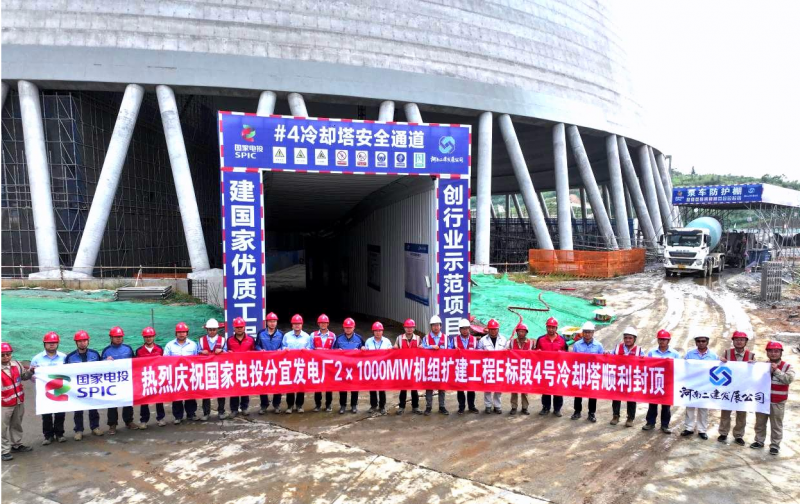
At 08:57 on September 12, the hyperbolic cooling tower for Unit 4 of the Fenyi Power Plant was successfully topped out. With this achievement, the main structural topping-out for both cooling towers of Units 3 and 4 in this project has been completed, marking a successful attainment of this critical engineering milestone and laying a solid foundation for the subsequent construction phases of the project.As core, tall structures in power plants, hyperbolic cooling towers impose stringent technical requirements for their cylinder wall construction; the entire process primarily involves high-altitude work, presenting significant challenges in linear alignment control, safety protection, and concrete quality management. Since the commencement of construction, under the company's visionary overall planning and scientific guidance, the Jiangxi Fenyi Power Plant Project Department has placed equal emphasis on safety and quality, optimized its construction organization plan, and refined various control and management measures. Facing multiple challenges—including rainy weather, a tight construction schedule, and the overlap of multiple construction phases—the project management team provided proactive leadership, while all construction crews worked around the clock, strictly adhered to technical specifications, rigorously implemented process inspection and approval procedures, and effectively coordinated resource allocation. Through the concerted efforts of the client, the supervision team, the general contractor, and all participating construction units, the entire construction workforce united their efforts to overcome difficulties, ensuring that the topping-out milestone was achieved ahead of schedule. The successful topping-out of both cooling towers marks the successful completion of the civil engineering construction phase for the tower cylinder walls, creating a viable work surface for the subsequent construction of the tower core structure, the water distribution framework, and other subsequent phases, while establishing a critical construction pathway.The journey ahead is yet to be determined; now is the time to forge ahead. Moving forward, the Project Department will take this successful milestone as a new starting point, maintain its relentless dedication, continue to strengthen safety production responsibilities, strictly adhere to the minimum quality standards for engineering projects, scientifically schedule construction activities, steadily advance all subsequent construction tasks, go all out to accelerate project progress, and vigorously pursue the overarching goal of commissioning the power unit on schedule.
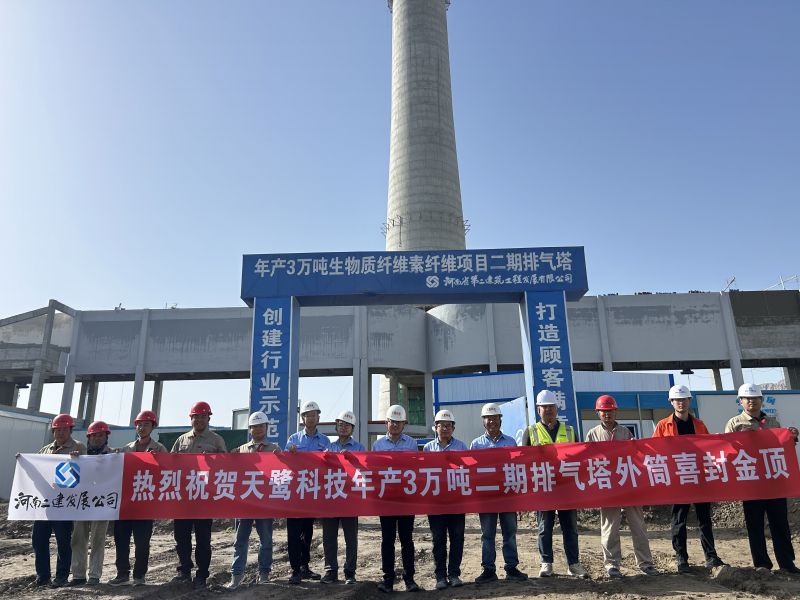
In the golden autumn of September, exciting news arrived: the exhaust stack was topped out, marking the beginning of a new chapter; by overcoming challenges, we crafted a high-quality project, paving the way for a prosperous future! Under the witness of the client's leadership and the supervision team, at 10:38 AM on September 12,2026, the concrete pouring operation for the 180-meter outer cylinder of the exhaust stack—part of Phase II of the Tumushuk Tianlu Technology Company's annual 30,000-ton biomass cellulose fiber production project in Xinjiang—was successfully completed, achieving a triumphant milestone.This project involves a cellulose production facility operated by Xinjiang Tianlu New Materials Technology Co., Ltd., featuring an exhaust stack with a height of 180 meters and an indoor-outdoor height difference of 0.30 meters. The exhaust stack is a tall structure constructed using a reinforced concrete design, supported by a foundation consisting of slurry-wall cast-in-place piles combined with a raft foundation. The maximum working height reaches 180 meters, presenting significant high-altitude work risks. The project is located on the edge of the Taklamakan Desert in Xinjiang, where the natural environmental conditions are extreme. During summer, intense sunlight can cause surface temperatures to reach up to 45°C, creating substantial heatstroke prevention challenges; intense ultraviolet radiation increases the risk of sunburn and heatstroke during outdoor operations; the significant diurnal temperature variation—with rapid nighttime cooling and chilly mornings and evenings—can lead to physical discomfort among workers and exacerbate the thermal expansion and contraction effects on construction equipment. The construction site frequently experiences windy and sandy weather conditions, including strong winds, blowing sand, floating dust, and sandstorms, which can cause a sharp decline in visibility, significantly disrupting high-altitude, hoisting, and lifting operations; the local climate is arid with little rainfall and extremely dry air, which can easily cause skin cracking and internal heat sensations among workers. In response to these complex and harsh site conditions, the project team has established a dual-risk prevention and control system addressing both high temperatures and strong winds, implementing comprehensive measures for heatstroke prevention and wind/sand storm mitigation. During the summer season, the frequency of on-site high-temperature inspections is increased, and sufficient heatstroke prevention supplies are allocated to effectively safeguard the personal safety of frontline workers. In response to the tight construction schedule imposed by the project owner, the project department scientifically coordinated the construction plan and implemented a two-shift rotation system to firmly prevent fatigue-induced work practices; it also ensured comprehensive provision of nighttime construction lighting and safety warning facilities, strengthened the on-duty and patrol arrangements for nighttime management personnel and safety officers, and strictly enforced shift-handover procedures for construction teams to ensure full control over the entire construction process. When confronted with adverse conditions—such as strong winds or sandstorms—the project department remained steadfast in upholding its safety production red line, immediately halting all work to mitigate risks during severe weather events, and carefully balanced the interrelationships between construction progress, project quality, and on-site safety management. All participating personnel worked together with unity and dedication, strictly adhered to safety and quality standards, seized critical construction milestones, systematically resolved various construction challenges, and exerted every effort to advance the project, achieving the phased goal of topping out by September ahead of schedule. Topping out is not the end, but a brand-new starting point. The successful topping out of the exhaust tower represents a significant milestone in the project and injects strong momentum into the subsequent phases of the project. The project team will diligently carry out all post-topping-out completion tasks, continue to implement robust on-site safety protection measures, maintain rigorous quality control, strengthen the safety defense line, and proceed methodically through all subsequent construction phases, striving for excellence to deliver a high-quality, premium engineering project.
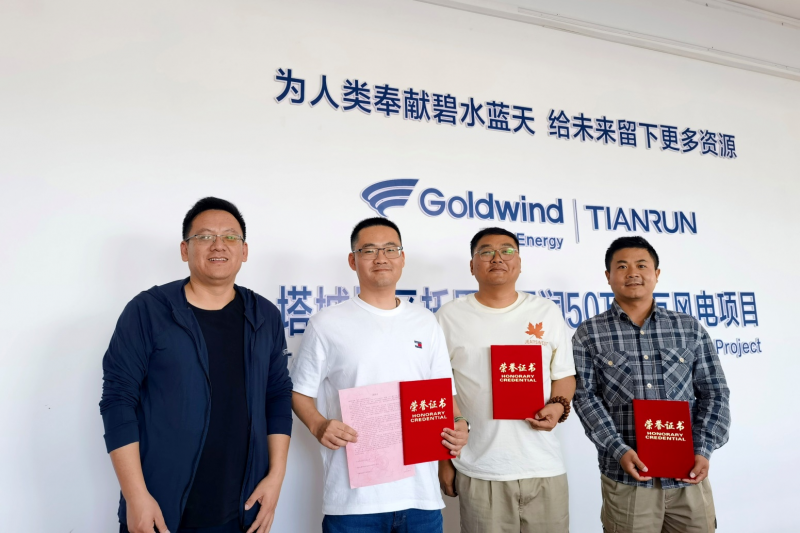
Recently, Section I of the Tianrun 500 MW Wind Power Project in Toli County, Tacheng Prefecture – constructed by our company – was awarded three honorary titles by the project owner, Toli Tianrun Wind Power Co., Ltd.: "Outstanding Construction Team," "Advanced Safety Unit," and "Advanced Quality Unit." Additionally, our company received a letter of commendation issued by the project owner and all participating construction parties, expressing high appreciation for the successful completion of the project.During the project construction phase, the tight schedule and heavy workload were compounded by frequent sandstorm conditions and a short window for hoisting large-scale equipment, making the construction organization significantly more challenging than usual. The project team took proactive measures rather than waiting passively; they confronted these challenges head-on by breaking down key milestone targets down to individual work teams and assigning them to daily tasks, seizing every available moment to maximize effective working time—and through a series of successful on-schedule completions, they achieved remarkable construction acceleration.Safety and quality have never been mere wall slogans, but rather fundamental principles deeply ingrained in everyone's heart. Within the project team, every member fulfills their responsibilities, and each phase of the project is seamlessly interconnected; every construction process is approached with meticulous care, and through unwavering dedication day after day, any potential issues are eliminated at their earliest stage. Behind this recognition lies the relentless effort of all participating personnel—those who face challenging conditions with courage, remain steadfast at their posts, and are committed to fulfilling their mission to the letter. The project team will take this commendation as a new starting point and continue to strive with renewed determination to contribute to the company's high-quality development.
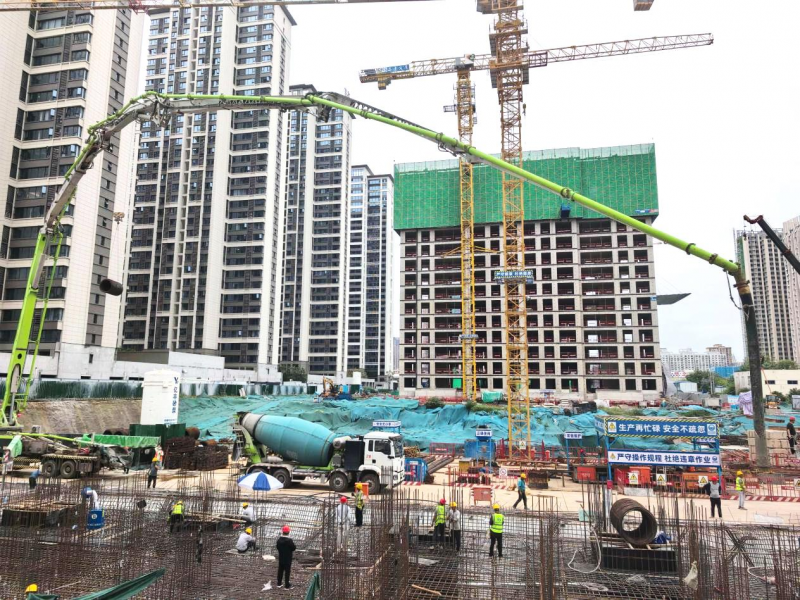
At 4:00 PM on August 28, the concrete pouring for the foundation raft slab of Building 1 in Compound No.3 of Guoyuecheng Yufu officially commenced. With the arrival of the first truckload of concrete, the critical phase of the main structural construction for this building was successfully initiated, laying a solid foundation for subsequent construction activities.The current dust control and management situation is challenging, the effective construction window is limited, and there is significant pressure in organizing on-site construction activities. The project department has proactively coordinated its efforts and precisely seized the available construction window, strictly implementing the "Six 100%" dust control requirements: continuous operation of perimeter sprinkler systems, full coverage of exposed soil and materials, standardized operation of vehicle washing equipment, real-time presence of personnel for dust monitoring, and the comprehensive implementation of dust suppression measures throughout the entire construction process.In response to environmental and regulatory constraints, all parties involved in the project worked in close coordination, scientifically allocating personnel, machinery, and materials to rigorously ensure the quality of large-volume concrete placement. Through collaborative efforts and overcoming various challenges, all construction personnel successfully completed the raft slab pouring task. Moving forward, the project team will continue to strictly adhere to safety, quality, and environmental protection standards, steadily advance subsequent construction phases, and ensure the efficient progress of the project.
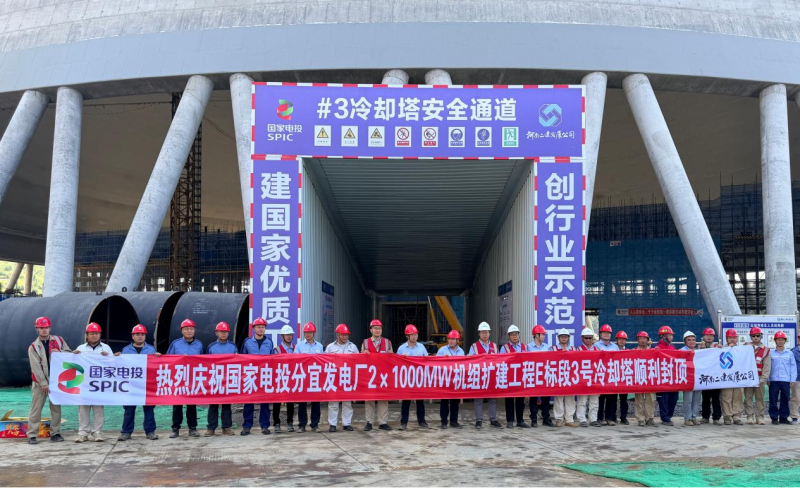
At 08:57 on August 28, with the completion of the final pour of cylinder wall concrete, Unit 3's cooling tower was successfully topped out – achieving this major milestone one month ahead of schedule.This marks a significant milestone in the phased progress of the project's civil engineering construction.This has created critical operational conditions for the subsequent tower core structure project and the water distribution system project, laying a solid foundation for the next milestone.This project involves the construction of two hyperbolic natural ventilation cooling towers, each with a water distribution area of 13,000 m² and a height of 175 m; these towers were cast in 127 successive sections. The base diameter of each tower is 148 m, and its throat diameter is 79 m – representing a massive structure with a highly complex design. The construction of the tower walls entails both significant technical challenges and high-altitude safety risks; the precise control of the hyperbolic profile, the assurance of the concrete's surface quality, and the implementation of construction safeguards under extreme high-temperature conditions – each of these aspects poses a rigorous test of the construction management capabilities.In terms of safety management, rigorous specialized control measures were implemented for high-altitude work, lifting and hoisting operations, hydraulic bridge lifting, and formwork installation systems; the "Four Measures and Two Plans" were fully executed; the three-tier inspection system was strengthened; daily verification of high-risk operation conditions was conducted; the safety baseline was strictly maintained throughout the entire process; and a zero-accident safety record was achieved during the cylinder wall construction phase.For quality control, emphasis is placed on monitoring template joint sealing, concrete slump, and casting and vibration techniques. Four methods are employed to ensure precise radius control for the cooling tower: measurement using a tensile gauge and ruler + GPS verification + laser distance meter verification + UAV aerial photography of the tower's center plus CAD verification – all designed to guarantee accurate radius measurements and smooth curve profiles. The "sample-guided construction" approach and process acceptance procedures are strictly implemented to ensure both the physical quality of the cooling tower's cylindrical wall and the desired visual finish.In terms of schedule management, the project department optimized its construction organization by centrally coordinating the allocation of personnel, machinery, and materials, implemented an early morning acceptance mechanism, and avoided pouring the cylinder wall concrete during periods of high ambient temperature; all participating work teams worked in rotating shifts to tackle challenging tasks, while technical, quality inspection, and testing personnel were present on-site throughout the entire construction process, collaborating with the supervision team and the general contractor to conduct proper process acceptance inspections, thereby efficiently advancing the construction of each cylinder wall section and achieving the topping-out target ahead of schedule.The successful topping-out of the Unit #3 cooling tower represents the culmination of the dedicated efforts and collaborative spirit demonstrated by all project management personnel and construction teams; it would not have been possible without the guidance of the company, as well as the strong support provided by the general contractor and the client.Moving forward, the Project Department will use this as a new starting point to fully transition into the installation and construction phases involving the tower core structure, the hoisting of water distribution components, and the installation of the water distribution system; it will continue to rigorously enforce safety and quality control measures, strengthen risk prevention for concurrent operations, coordinate the advancement of all key milestones, and make every effort to ensure the successful achievement of the project's construction objectives.
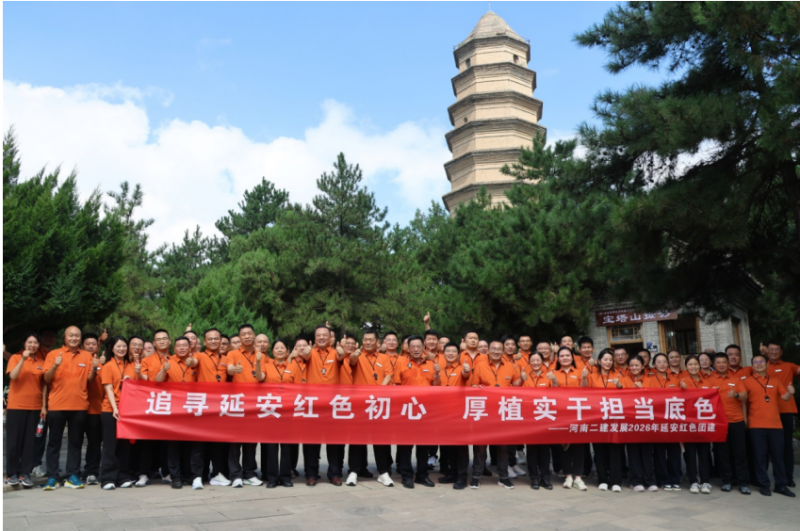
To carry forward the revolutionary heritage, draw inspiration for continuous progress, further strengthen the Party spirit among the management team, and foster team cohesion and a sense of mission, the company organized a Red-themed learning trip to Yan'an for its mid-and senior-level management teams. Following in the footsteps of revolutionary pioneers, all participants revisited the tumultuous era of the revolution and experienced the revolutionary spirit through an immersive journey.Group photo at the Yan'an Revolutionary Memorial HallThis educational tour followed the scheduled itinerary, visiting several red-themed educational sites, including the Yan 'an Revolutionary Memorial Hall, the former site of the Anti-Japanese Military and Political University, the Yangjialing Revolutionary Site, the Zaoyuan Revolutionary Site, Baota Mountain, the former site of the Lu Xun Academy of Arts, and the Yan' an Museum. Led by professional guides, participants paused to listen to accounts of revolutionary history, carefully studied historical documents, reflected on the glorious thirteen-year journey of arduous struggle undertaken by the Central Committee of the Communist Party of China in Yan 'an, gained a deep understanding of the Yan' an Spirit—characterized by self-reliance, hard work, seeking truth from facts, and serving the people wholeheartedly—and profoundly appreciated the noble dedication of the revolutionary forebears in steadfastly upholding their faith and bravely shouldering their mission amidst adversity and challenges.Each brick and tile carries red memories; every word and action refines one's original commitment to striving forward. As participants wandered through the courtyards of the historic sites, they immersed themselves in a retrospective journey through history—strengthening their ideals and convictions by tracing their roots, and forging a shared commitment to progress through discussions and exchanges. All participants unanimously remarked that this Yan' an study tour was not merely an educational experience in history, but also a profound process of ideological tempering and spiritual renewal.Group photo at Baota MountainThe exhibition hall's historical artifacts bear witness to the remarkable years that have passed.Tracing the revolutionary journey, gathering the strength to forge ahead.Carrying forward the Yan 'an spirit of perseverance and dedication, the team will channel its insights from this learning initiative into a powerful driving force for innovation and growth. By upholding and nurturing the foundational ethos of Yan' an's relentless striving, the team will dedicate itself to overcoming challenges and excelling in its respective roles, meet market challenges with renewed determination, go all out to enhance the quality and efficiency of all its initiatives, and strive to write a new chapter in high-quality development.Group photo at the Yan'an Museum

 WeChat