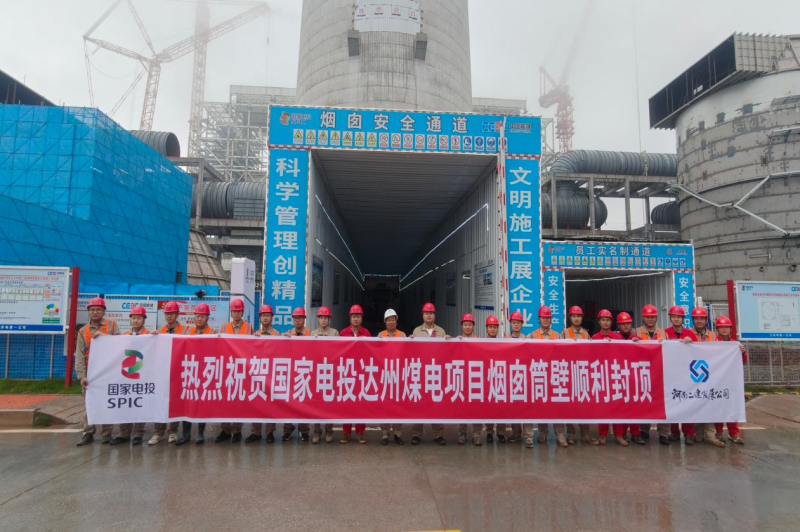
In the golden autumn of September, exciting news arrived: the exhaust stack was topped out, marking the beginning of a new chapter; by overcoming challenges, we crafted a high-quality project, paving the way for a prosperous future! Under the witness of the client's leadership and the supervision team, at 10:38 AM on September 12,2026, the concrete pouring operation for the 180-meter outer cylinder of the exhaust stack—part of Phase II of the Tumushuk Tianlu Technology Company's annual 30,000-ton biomass cellulose fiber production project in Xinjiang—was successfully completed, achieving a triumphant milestone.
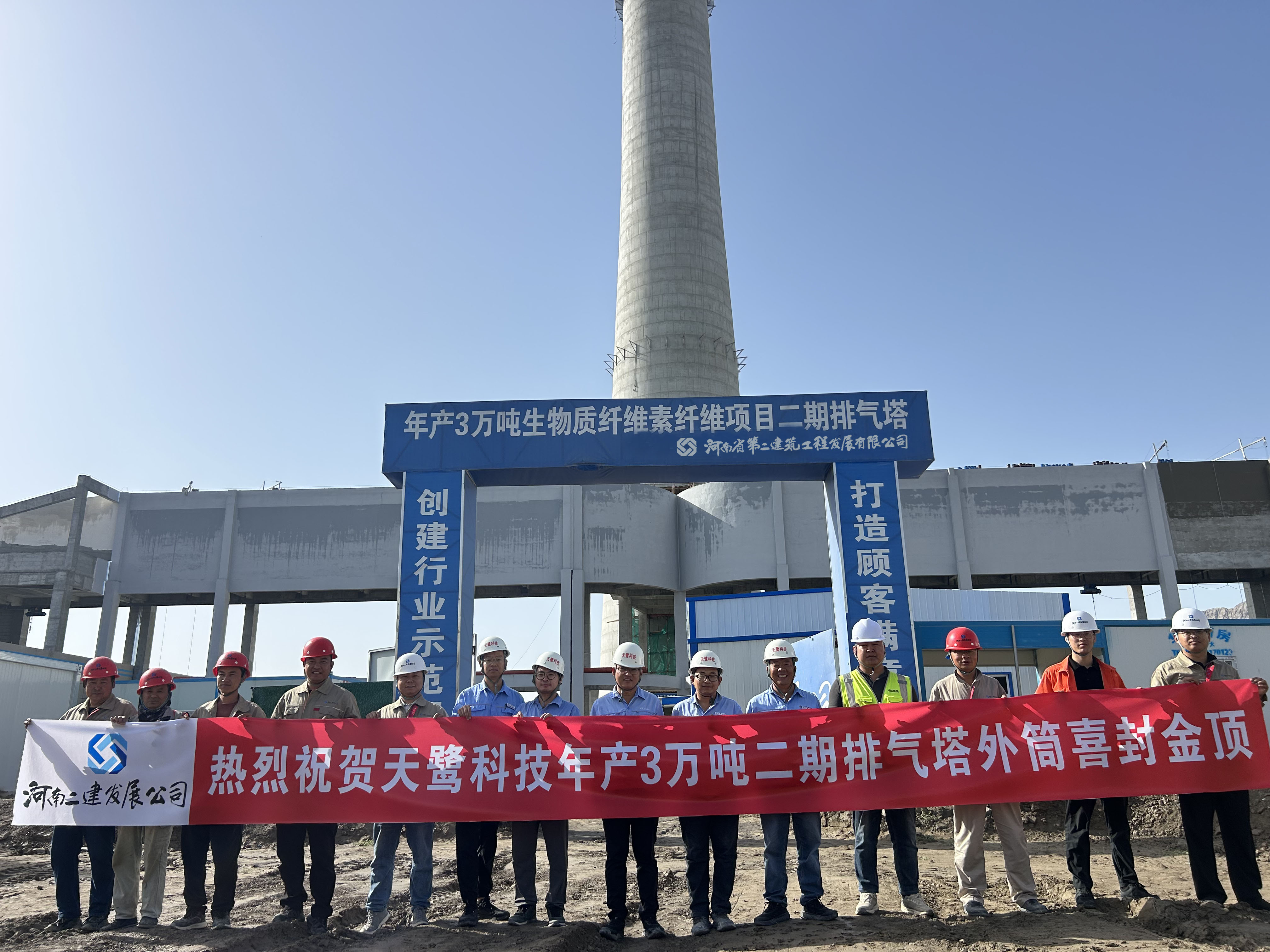
This project involves a cellulose production facility operated by Xinjiang Tianlu New Materials Technology Co., Ltd., featuring an exhaust stack with a height of 180 meters and an indoor-outdoor height difference of 0.30 meters. The exhaust stack is a tall structure constructed using a reinforced concrete design, supported by a foundation consisting of slurry-wall cast-in-place piles combined with a raft foundation. The maximum working height reaches 180 meters, presenting significant high-altitude work risks.
The project is located on the edge of the Taklamakan Desert in Xinjiang, where the natural environmental conditions are extreme. During summer, intense sunlight can cause surface temperatures to reach up to 45°C, creating substantial heatstroke prevention challenges; intense ultraviolet radiation increases the risk of sunburn and heatstroke during outdoor operations; the significant diurnal temperature variation—with rapid nighttime cooling and chilly mornings and evenings—can lead to physical discomfort among workers and exacerbate the thermal expansion and contraction effects on construction equipment. The construction site frequently experiences windy and sandy weather conditions, including strong winds, blowing sand, floating dust, and sandstorms, which can cause a sharp decline in visibility, significantly disrupting high-altitude, hoisting, and lifting operations; the local climate is arid with little rainfall and extremely dry air, which can easily cause skin cracking and internal heat sensations among workers.
In response to these complex and harsh site conditions, the project team has established a dual-risk prevention and control system addressing both high temperatures and strong winds, implementing comprehensive measures for heatstroke prevention and wind/sand storm mitigation. During the summer season, the frequency of on-site high-temperature inspections is increased, and sufficient heatstroke prevention supplies are allocated to effectively safeguard the personal safety of frontline workers. In response to the tight construction schedule imposed by the project owner, the project department scientifically coordinated the construction plan and implemented a two-shift rotation system to firmly prevent fatigue-induced work practices; it also ensured comprehensive provision of nighttime construction lighting and safety warning facilities, strengthened the on-duty and patrol arrangements for nighttime management personnel and safety officers, and strictly enforced shift-handover procedures for construction teams to ensure full control over the entire construction process. When confronted with adverse conditions—such as strong winds or sandstorms—the project department remained steadfast in upholding its safety production red line, immediately halting all work to mitigate risks during severe weather events, and carefully balanced the interrelationships between construction progress, project quality, and on-site safety management.
All participating personnel worked together with unity and dedication, strictly adhered to safety and quality standards, seized critical construction milestones, systematically resolved various construction challenges, and exerted every effort to advance the project, achieving the phased goal of topping out by September ahead of schedule.
Topping out is not the end, but a brand-new starting point. The successful topping out of the exhaust tower represents a significant milestone in the project and injects strong momentum into the subsequent phases of the project. The project team will diligently carry out all post-topping-out completion tasks, continue to implement robust on-site safety protection measures, maintain rigorous quality control, strengthen the safety defense line, and proceed methodically through all subsequent construction phases, striving for excellence to deliver a high-quality, premium engineering project.

 WeChat